
Groundcovers Native to Florida
Luckily we have many native groundcovers in Florida so there is certainly something for everyone’s green space and circumstance.
Some groundcovers work better than others and the best way to achieve success, and have thriving groundcovers, is to plant them in the right place. That is to say plant them in the same soil type, sunlight, and moisture conditions they require in their natural habitats.
Of course that is not always possible so some may need to be watered more often if you want to use that particular plant. It depends on your ability to keep the plants maintained with the correct moisture. I prefer to put the right plant in the right place so I don’t have any maintenance at all.
Some of the groundcovers listed won’t be ideal for all locations either because they grow too tall, have bee attracting flowers, have stiff stems, are thorny, or don’t grow quickly enough. Gardening with natives truly is an experiment and some plants may need to be moved at a later date if they are not thriving or producing the effect you’re looking to achieve in that particular location. So be open to change, trying new things and listening to your plants. If they are struggling in a certain spot try them in another one and see if they like it better.
Many of these groundcovers come up in lawns and if left on their own have the potential to replace the lawn grass if that’s what you are looking to do.
This is not an all inclusive list, but most of the common, native, groundcovers. The rarer ones may be very difficult to locate and many require specialized ecosystems in order to survive.
Bacopa caroliniana
(lemon bacopa)
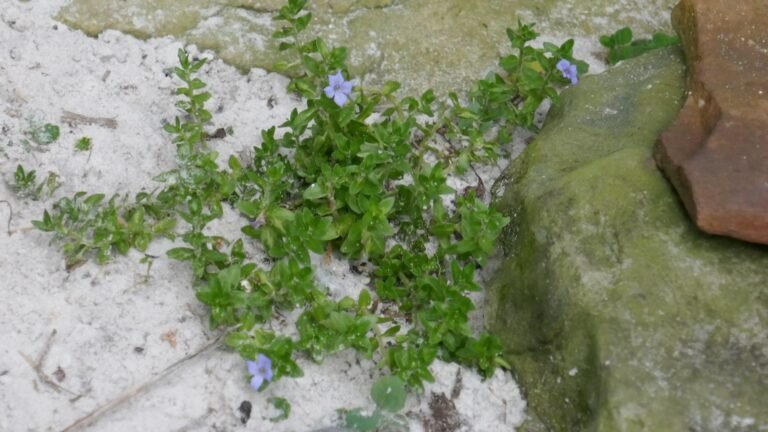
Latin Name: Bacopa caroliniana
Common Names: lemon bacopa, blue water hyssop and Carolina hyssop.
Family: it is found in the Plantaginaceae, or plantain, family.
Form: lemon bacopa is a perennial wildflower that grows to a height of about 4 to 12 inches.
Leaves: the leaves are opposite and entire and clasping on the stem. They are ovate to elliptic in shape, and have a lemon scent when crushed.
Flowers: the small blue flowers appear in the spring through the fall.
Habitat: lemon bacopa grows in moist areas such as wet woods, stream banks, lake margins, drainage ditches, wet fence rows and other riparian areas.
Native Range: it is found in the southeastern United States from Virginia south to Florida, and west to Texas. It is found in just about every Florida county.
Landscape Use: in the home landscape it grows in full sun with average to moist soils. It works great between stepping stones and can be gently mowed if needed. It tolerates light foot traffic.
Wildlife Uses: the flowers are a source of nectar for many insects including bees, beetles, butterflies, flies, and wasps. Small mammals may enjoy eating the leaves, flowers and flower buds.
Propagation: it roots at most leaf nodes so just about any size piece can be transplanted. If you’re trying to get it established between stepping stones make many small cuttings and grow them in small containers. Once they develop roots they can be planted out. You can also pull up short pieces that have roots and move those. As long as it is a moist area no care is needed after moving them.
Bacopa monnieri
(herb of grace)
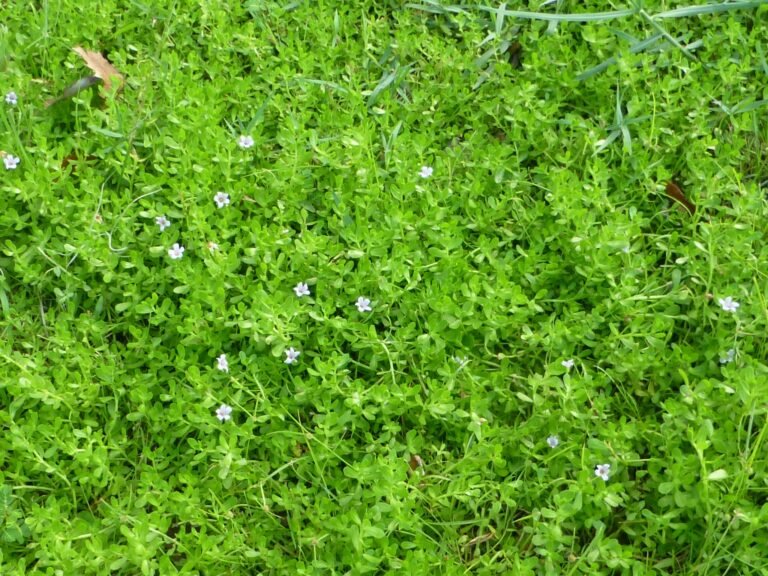
Latin Name: Bacopa monnieri
Common Names: herb-of-grace, Indian pennywort, water hyssop, and Brahmi.
Family: it is found in the Plantaginaceae, or plantain, family.
Form: is a perennial wildflower that grows to a height of about 4 to 6 inches.
Leaves: its leaves are opposite and entire. They are sessile which means they do not have leaf stalks. They are obovate in shape. They are odorless when crushed.
Flowers: the white flowers appear all year.
Habitat: it grows in moist areas such as wet woods, stream banks, lake margins, drainage ditches and wet fence rows.
Native Range: it is found naturally occurring throughout the southeastern United States and grows in almost every county of Florida.
Landscape Use: it looks, and grows, much like purslane. Like the other Bacopa it roots easily and can be used in between stepping stones. Both are fragile and don’t withstand a lot of foot traffic.
Wildlife Uses: the flowers are a source of nectar for many insects including bees, beetles, butterflies, flies, and wasps. Small mammals may enjoy eating the leaves, flowers and flower buds.
Propagation: it roots at most leaf nodes so just about any size piece can be transplanted. If you’re trying to get it established between stepping stones make, and start, many small cuttings and plant those out when they begin to develop roots. You can also pull up short pieces with roots on them and move those. If they are to be moved to a moist site then no further attention is needed.
Clinopodium brownei
(Browne's savory)
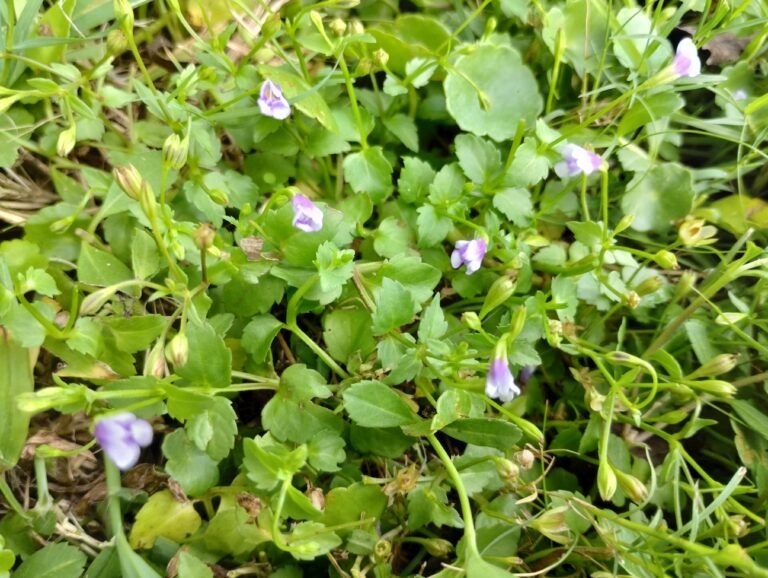
Latin Name: Clinopodium brownei. Previously known as Micromeria brownei.
Common Names: creeping Charlie, St. John’s mint, and West Indian thyme.
Family: it is found in the Lamiaceae, or mint, family.
Form: it is an evergreen, perennial, wildflower that grows to 6 to 12 inches in height.
Leaves: the leaves are opposite and stalked. The leaf tip, or apex, is toothed. When the leaves are crushed the aroma is similar to mint or pennyroyal.
Flowers: the purple-white flowers appear all year.
Habitat: it grows in wet ditches, swamps, moist woods, and lake edges.
Native Range: it is native to the southeastern United States and is found in many Florida counties.
Landscape Use: in the home landscape it works well in between stepping stones. It is delicate, but does tolerate light foot traffic.
Wildlife Uses: the tiny flowers are used by many small pollinators and mammals browse the foliage and flowers.
Propagation: it roots easily and transplants very well as long as the site is moist, or kept moist.
Crocanthemum corymbosum
(pinebarren frostweed)
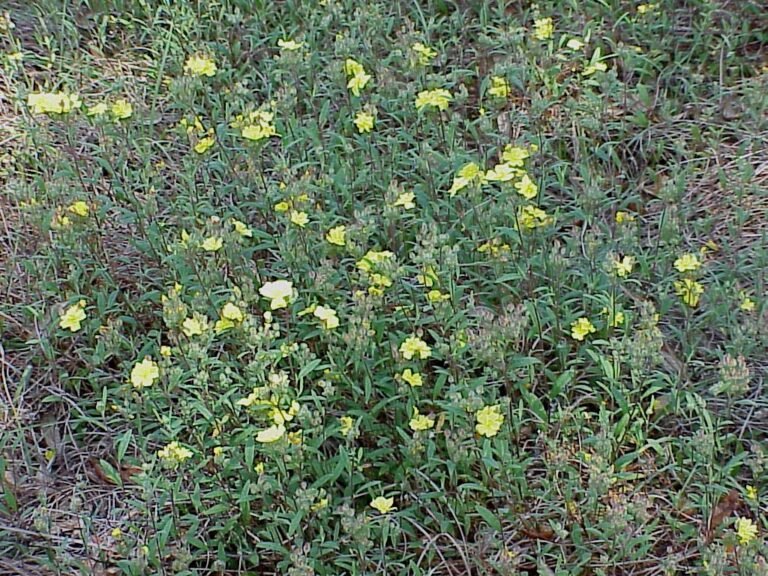
Latin Name: Crocanthemum corymbosum. It was previously called Helianthemum corymbosum
Common Names: rock-rose and pinebarren sunrose.
Family: it is found in the Cistaceae, or rock-rose, family.
Form: it is a perennial wildflower that grows to a height of 6 to 12 inches in height.
Leaves: its leaves are alternate and narrowly elliptic to ovate in shape. The undersides are silvery-green and the upper sides are dark green.
Flowers: the yellow flowers appear in late winter, spring and summer.
Habitat: it occurs naturally in dry forests, hammocks, and pinelands.
Native Range: its native range is the southeastern United States and is found in just about every county in Florida.
Landscape Use: it works in the landscape in dry, sandy, areas. It’s not a good candidate for foot traffic, but can create a dense blanket of yellow flowers once established in a given area. It mixes well with other dainty wildflowers that are a bit taller. It’s not a good candidate for foot traffic or in between stepping stones because it is too tall and fragile to be kept mowed or to be walked upon.
Wildlife Uses: the small yellow flowers are used as a nectar source for many small pollinators and the seeds are consumed by small birds.
Propagation: it is best started from seed because it can be difficult to transplant. If you have the opportunity to get rooted cuttings it is best to start them in small pots until they begin to put out new growth.
Crotalaria rotundifolia
(rabbit bells)
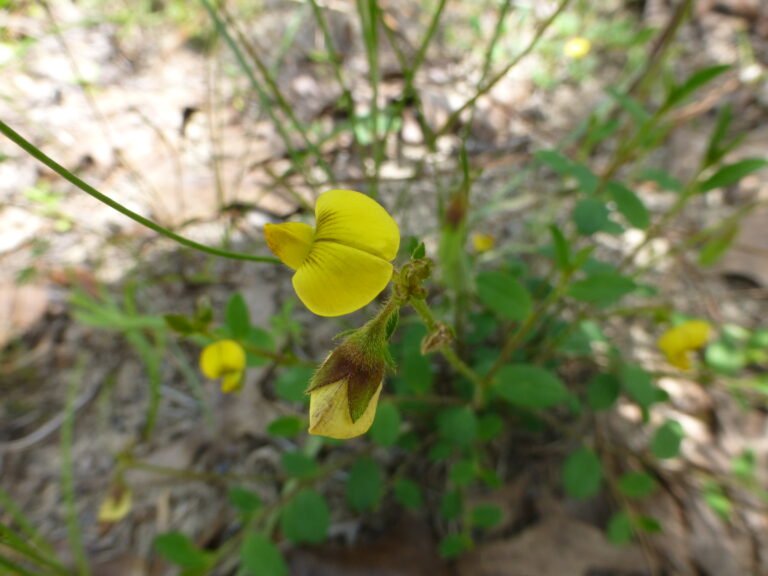
Latin Name: Crotalaria rotundifolia
Common Names: rabbit bells, low rattlebox, and prostrate rattlebox.
Family: it is found in the Fabaceae, or bean, family.
Form: it is a low growing perennial, wildflower, that spreads out by creeping stems. It grows from 3 to 6 inches.
Leaves: its leaves are alternate with short stalks and are oval to elliptic in shape with a tiny spine at the tip.
Flowers: the yellow flowers appear in the spring and summer.
Habitat: it is found growing in dry sandy sites such as dry woods and pinelands.
Native Range: it is native to the southeastern United States and is found naturally occurring in every county in Florida.
Landscape Use: it is a great wildflower to fill in bare spots in dry sandy locations. It’s not a good candidate for in between stepping stones because it is a rather stiff plant and produces rather large seed pods.
Wildlife Uses: the flowers are a source of nectar for many insects and the seeds, that pop out of the pods, are eaten by ground foraging birds. It is considered poisonous so keep it away from livestock or grazing animals.
Propagation: it is best grown from seed, however small specimens can be transplanted if the flowers and pods are removed to allow the plant to put its strength into growing new roots and recovering from the move. It’s best to attempt them in small growing pots, to make sure they will survive the move, before planting them out in the landscape.
Dichondra carolinensis
(Carolina ponysfoot)
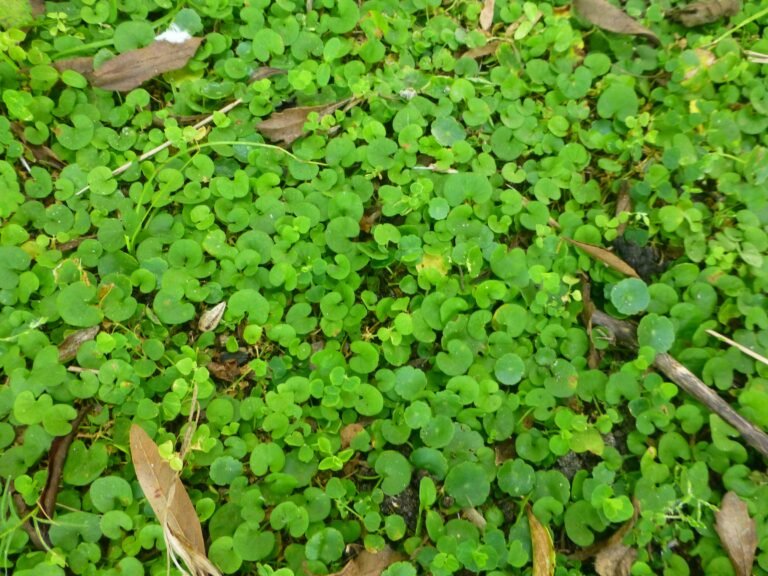
Latin Name: Dichondra caroliniensis
Common Names: ponyfoot, grass ponysfoot, and pony’s foot.
Family: Family: it is found in the Convolvulaceae, or morning glory, family.
Form: a low growing perennial wildflower that reaches a mature height of 3 inches.
Leaves: its leaves are round, or kidney-shaped, and bright green.
Flowers: the flowers are very small and green and go unnoticed.
Habitat: moist forests, wet roadsides, riparian areas such as pond and lake margins, and moist lawns.
Native Range: it is native to the southeastern United States, and is found in most counties of Florida.
Landscape Use: its a great groundcover to replace lawn grass because it grows in a variety of environments from sandy to rich loam, and from sunny to part shade. It does best with consistently moist soil. It tolerated foot traffic well.
Wildlife Uses: the flowers are a nectar source for many pollinators and the foliage provides great cover, and habitat, for small reptiles, amphibians, insects and even mammals. The foliage is eaten by browsing animals such as rabbits and deer.
Propagation: it roots easily and transplants very well as long as the site is moist, or kept moist.
Diodia virginiana
(Virginia buttonweed)
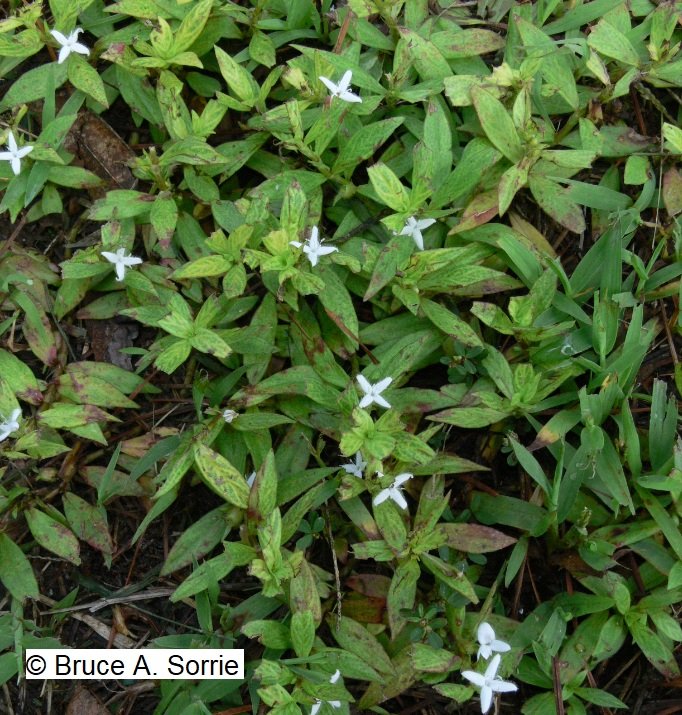
Latin Name: Diodia virginiana
Common Names: Virginia buttonweed, buttonweed, large buttonweed, and poor Joe.
Family: it is found in the Rubiaceae, or madder, family of plants.
Form: a perennial wildflower that grows to 4 to 30 inches – spreading out rather than up.
Leaves: the leaves are opposite and sessile. They are linear to lanceolate in shape with the margins having tiny cilia or tiny hair like structures.
Flowers: the little white flowers appear in the summer and fall.
Habitat: it is found naturally occurring in moist forests, pinelands and swamps.
Native Range: it is native to the southeastern and south-central United States and is found in every county of Florida.
Landscape Use: it is a good choice for filling in an area, but it does die back in the winter so the area will be bare for a few months unless another plant is grown with it. It will not smother other plants so mixing it with taller wildflowers works well.
Wildlife Uses: the flowers are a nectar source for many pollinators and the foliage provides great cover, and habitat, for small reptiles, amphibians, insects and even mammals.
Propagation: it can be grown from seed, transplants, and cuttings. The plant roots at the stem nodes so it is easy to root many individuals to use to fill in a given area with this groundcover.
Dyschoriste humistrata
(swamp twinflower)
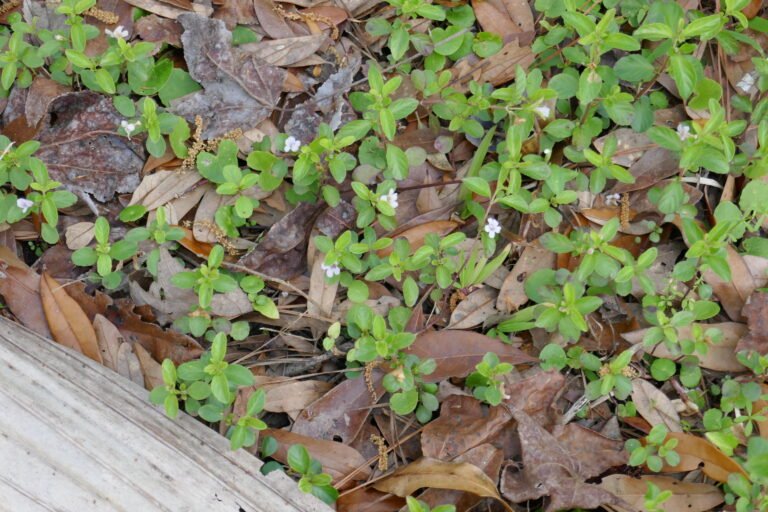
Latin Name: Dyschoriste humistrata
Common Names: swamp twinflower and swamp snakeherb.
Family: it is found in the Acanthaceae, or acanthus, family of plants.
Form: it grows in moist to wet sites to a height of 12 to 36 inches. It spreads outward rather than upright.
Leaves: its leaves are opposite and ovoid to elliptic-ovate in shape with entire margins.
Flowers: the tiny blue flowers appear in the spring, summer and fall.
Habitat: it occurs naturally in moist to wet forests and other riparian areas.
Native Range: it is native to the southeastern United States and is found in Florida from Liberty county south to about DeSoto county.
Landscape Use: it grows in part shade to full sun with moist soils. This plant grows outwards by sending runners to new areas. It can handle light foot traffic. It does die back in the winter so is best planted with another groundcover.
Wildlife Uses: it is a larval host plant for the common buckeye butterfly. The tiny flowers are used by tiny pollinators. The foliage provides a safe hiding space for small wildlife.
Propagation: it can be grown from seed, transplants, or cuttings. It roots readily at leaf nodes where it touches the ground so pieces can be pulled up and moved to fill in bare spots.
Eryngium baldwinii
(Baldwin's eryngo)
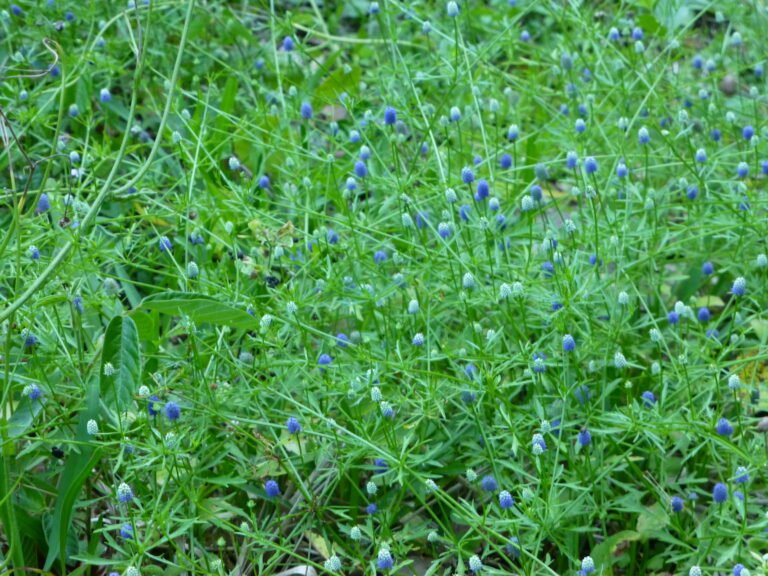
Latin Name: Eryngium baldwinii
Common Names: another common name is blue eryngo.
Family: it is found in the Apiaceae, or carrot, family.
Form: it is a perennial wildflower that grows to about a foot in height and grows prostrate as a ground cover.
Leaves: its leaves are alternate with toothed margins and are elliptic to elliptic- ovate in shape.
Flowers: the tiny blue flowers appear spring through fall.
Habitat: it occurs naturally in moist meadows, roadsides, woodland borders, riparian areas, and wet woodlands.
Native Range: it is native to Florida and Georgia. In Florida it can be found from Holmes county south to Monroe Mainland.
Landscape Use: in the home landscape it grows in full sun to part shade with average to moist soils. It looks best allowed to spread out as a ground cover. It does tolerate light foot traffic however since it’s a spiky wildflower it doesn’t feel good on bare feet.
Wildlife Uses: the flowers are a nectar source for many small insects, and squirrels and songbirds eat the flowers and seeds.
Since it is found in the carrot family it should attract the eastern black swallowtail to use it as a larval host plant, but I have not had the opportunity to see that in my green space yet.
Propagation: propagation is achieved by growing it from seed or transplants. It roots at leaf nodes that touch the ground so any piece of the plant that has roots can be transplanted to a moist site.
Euphorbia cordifolia
(heartleaf sandmat)
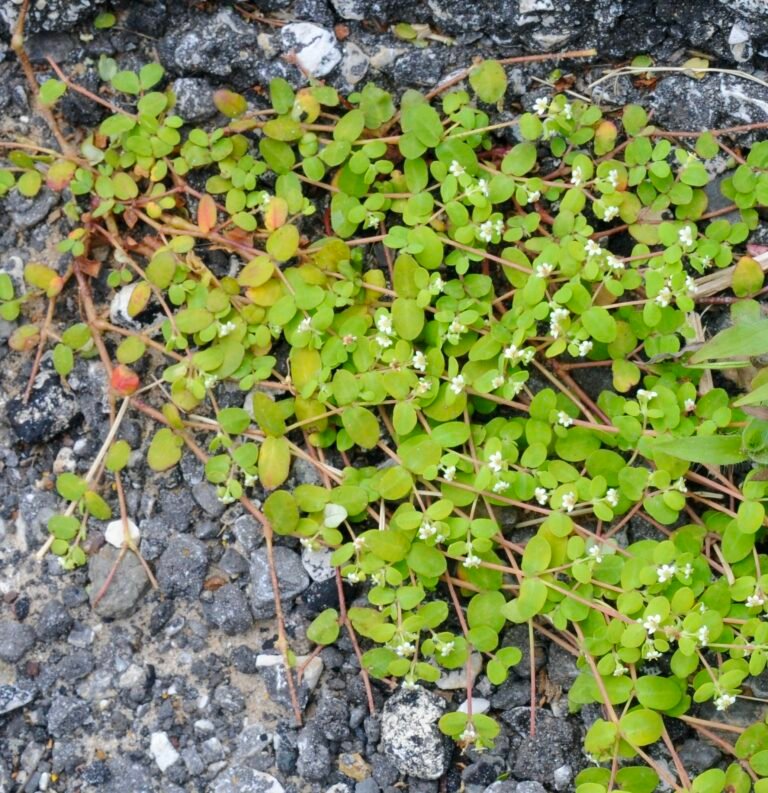
Latin Name: Euphorbia cordifolia. Previously known as Chamaesyce cordifolia
Common Name: heartleaf sandmat
Family: it is found in the Euphorbiaceae, or spurge, family.
Form: this low growing perennial wildflower grows to about 4 to 20 inches.
Leaves: its leaves are opposite with entire margins. The shape is ovate to oblong, however some of the leaf bases may be cordate in shape giving the leaves a heart shaped appearance.
Flowers: the small white-pink flowers appear in the summer and continue through the fall.
Habitat: it is found naturally occurring in dry sandy soils of pine sandhills and Florida scrub.
Native Range: it is found in Florida from Okaloosa county south to Highlands county. It is native to the southeastern United States.
Landscape Use: this groundcover grows in dry sandy areas which should not be a problem for most homeowners in Florida. It can be grown in part shade to full sun. It does tolerate light foot traffic. As with all of these flowering groundcovers it is best to be careful when walking barefoot because you may get stung by a pollinator visiting the flowers.
Wildlife Uses: the tiny flowers offer nectar to a wide variety of small pollinators. The foliage provides cover for small wildlife.
Propagation: this plant contains an oozing latex when cut so be careful when handling it if you are allergic. When taking cuttings it is best to let them dry briefly so the latex can stop flowing before rooting them, if possible, in a soil less mixture. Small specimens may be transplanted but it’s not a large survival rate. Be sure to remove flowers or seeds to help the plant recover from the shock.
Geobalanus oblongifolius
(gopher apple)
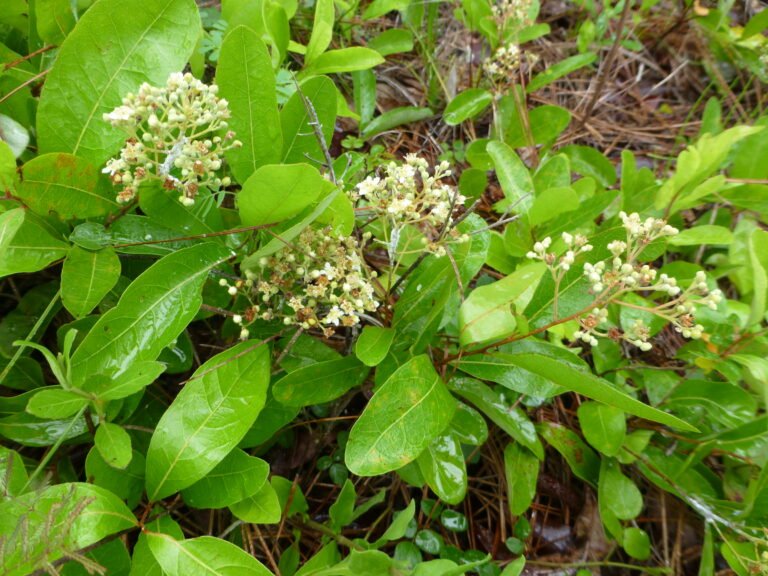
Latin Name: Geobalanus oblongifolius. It was previously named Chrysobalanus oblongifolius and Licania michauxii.
Common Names: gopher apple and ground oak.
Family: it is found in the Chrysobalanaceae, or cocoa-plum family of plants.
Form: it is a low growing perennial plant that get to a height of about 12 inches.
Leaves: its leaves are leathery and look similar to a low growing oak. The margins are entire and the shape is oblanceolate to obovate.
Flowers: the cream colored flowers appear in the spring and summer.
Habitat: it occurs naturally in dry pinelands, scrub, and dry forests.
Native Range: it is native to the southeastern United States and is found in most Florida counties.
Landscape Use: it grows in dry to average moisture so it can be grown in problem dry sites. It can grow in part shade, but flowers better with at least six hours of sunlight.
Wildlife Uses: the flowers are used by pollinators as a nectar source and the fruit is eaten by a wide range of wildlife.
Propagation: it is best to grow from seed or soft wood cuttings. Mature, woody, cuttings do not generally root very well.
Geranium carolinianum
(wild geranium)
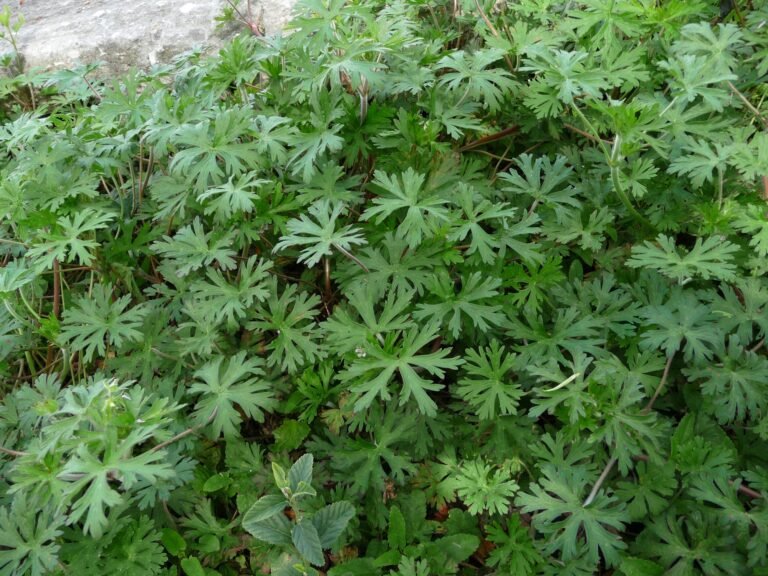
Latin Name: Geranium carolinianum
Common Names: cranesbill, cranes-bill, Carolina crane’s-bill and Carolina geranium
Family: it is in the Geraniaceae, or geranium, family.
Form: it is an annual wildflower that grows to a mature height of 2 feet.
Leaves: wild geranium leaves are opposite and palmately lobed with deep clefts.
Flowers: small pink flowers appear in late winter, spring, summer and fall.
Habitat: it grows in disturbed sites, open woods and lawns.
Native Range: In Florida it grows throughout most of the state with the exception of a few counties farthest south including the Keys. It is native to just about every state in the United States.
Landscape Use: it grows in average to dry soils in part shade to full sun. It grows low to the ground so it is a nice wildflower to plant at the base of taller ones. It looks amazing en mass so plant as many as you can to get total coverage. It doesn’t tolerate foot traffic. It will reseed and produce new plants each year.
Wildlife Uses: small pink flowers are used by butterflies and bees as a nectar source and the seeds are eaten by songbirds and small mammals.
Propagation: is achieved mostly through seeds since it is an annual. However small seedlings may be transplanted if you locate them around a parent plant or where some grew the previous year. This wildflower tends to volunteer in quite a few places in the garden, lawn and roadside.
Houstonia procumbens
(innocence)
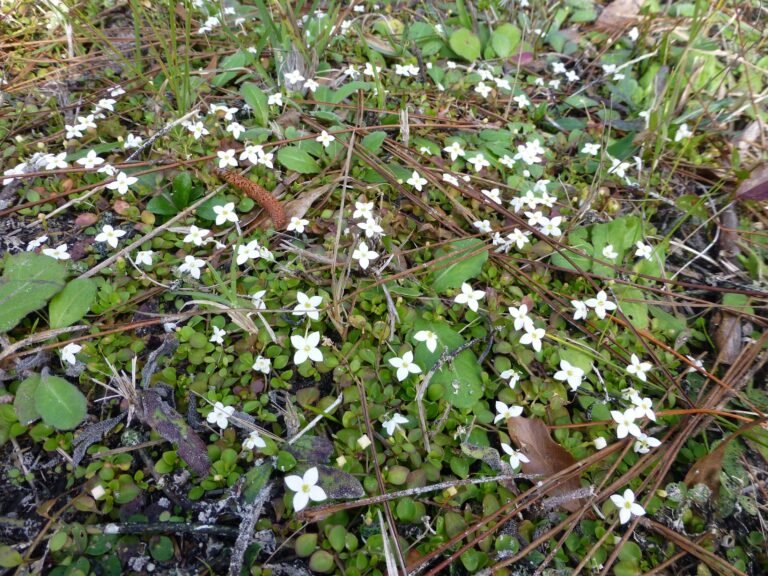
Latin Name: Houstonia procumbens. Previously known as Hedyotis procumbens.
Common Names: innocence, roundleaf bluet, fairy footprints, and creeping bluet.
Family: it is found in the Rubiaceae, or madder, family.
Form: it is a very low growing, mat forming, perennial wildflower. The plant rarely exceeds 2 inches in height, and generally no more than ten inches in width.
Leaves: its leaves are opposite, ovate to elliptic with entire margins, and have a succulent appearance.
Flowers: the white flowers bloom from winter through spring.
Habitat: it can be found naturally occurring in dry pinelands, flatwoods, sandhills, open woodlands, and disturbed sites.
Native Range: it is found naturally occurring in most counties of Florida and throughout the southeastern United States.
Landscape Use: in the home landscape it grows in full sun to part shade with average to dry soils.
It can be grown in between stepping stones and can tolerate light foot traffic.
Wildlife Uses: the flower nectar provides for many insects such as bees, bee flies, and small butterflies.
Propagation: it does easily transplant (to site or in pots) if care is taken to retain as much of the soil and organic matter as possible around the root system, and keep it well watered until established.
Hydrocotyle umbellata
(manyflower marshpennywort)
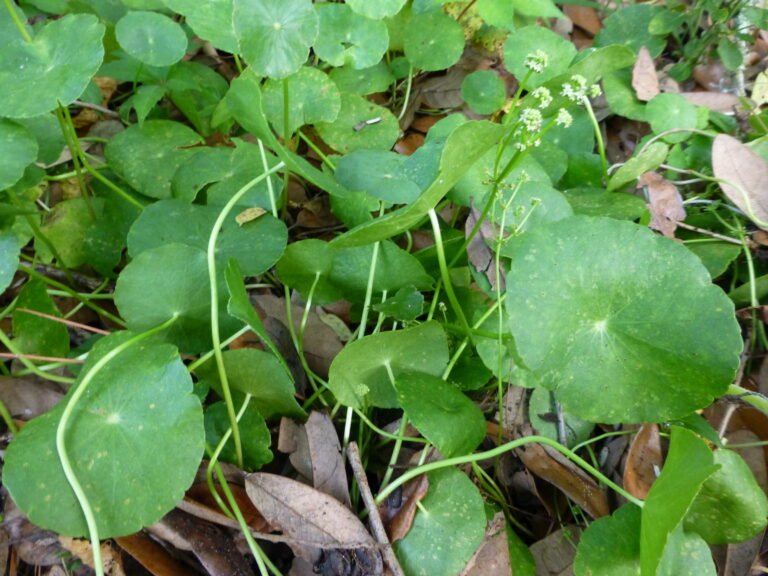
Latin Name: Hydrocotyle umbellata
Common Names: dollarweed, and water pennywort.
Family: it is found in the Araliaceae, or the ginseng, family.
Form: a low growing perennial wildflower that grows to about 8 inches in height, but spreads by runners.
Leaves: the leaves grow along the underground stems and appear at the end of a long stalk that attaches to the leaf directly in the center. They are shiny and have scalloped margins. They are ovoid to round in shape.
Flowers: the tiny white-green flowers appear all year.
Habitat: moist and wet areas in lawns, and in shallow water along riparian areas.
Native Range: It is found in just about every county in Florida except for a few scattered counties and the Keys. It is native to most of the United States.
Landscape Use: in the home landscape this plant needs constantly moist soil to thrive so if you have a problem area that stays wet this is the perfect groundcover. It grows in part shade to full sun. It does tolerate foot traffic.
Wildlife Uses: the tiny flowers are pollinated by tiny insects. The foliage provides good cover for reptiles and amphibians. Mammals such as marsh rabbits eat the foliage.
Propagation: it is very easy to transplant because it roots at each leaf node. As long as you are moving it to a moist location no maintenance is required after it’s transplanted.
Ipomoea pes-caprae ssp. brasiliensis
(railroad vine)
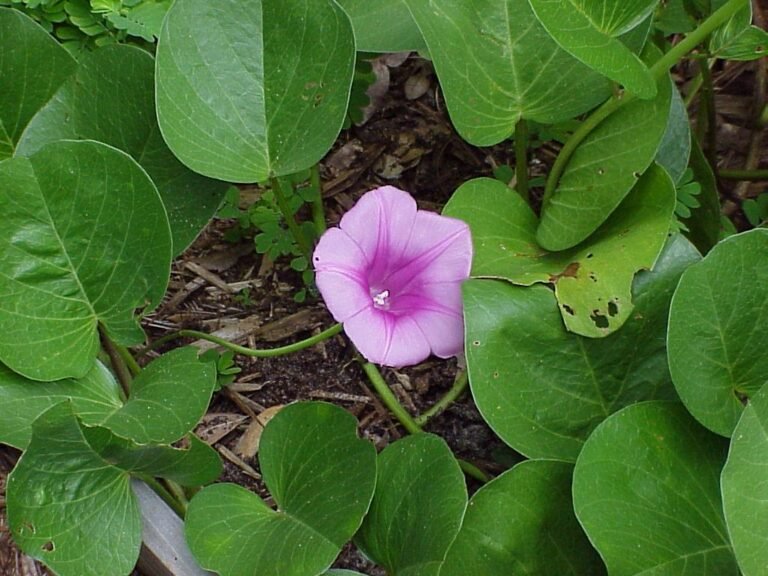
Latin Name: Ipomoea pes-caprae ssp. brasiliensis.
Common Names: beach morning glory, goat’s foot, railroad vine, and bayhops.
Family: it is found in the Convolvulaceae, or morning glory, family.
Form: a trailing, perennial, vine that attains an overall height of about 16 inches.
Leaves: its leaves are alternate, entire, and grow on long stalks and are notched at the apex, or tip. They are ovoid to kidney shaped. They are very thick and succulent.
Flowers: the large purple flowers appear all year.
Habitat: coastal areas, beaches, sand dunes, and saltwater canals.
Native Range: found naturally occurring in the southeastern United States. In Florida it is found naturally occurring along the coastal counties.
Landscape Use: it needs full sun for the best growth. It grows in dry to average moisture. It is not very dense so other wildflowers should be planted amongst it to keep unwanted plants at bay.
Wildlife Uses: the morning glory flowers are used by large butterflies and bees. The foliage provide excellent forage and cover for a lot of wildlife.
Propagation: it can be grown from seed or cuttings. Cuttings should be no longer than 10 inches with the flowers and most leaves removed. It will root in water or soil. Small specimens can be transplanted successfully.
Justicia pringlei
(Cooley's water-willow)
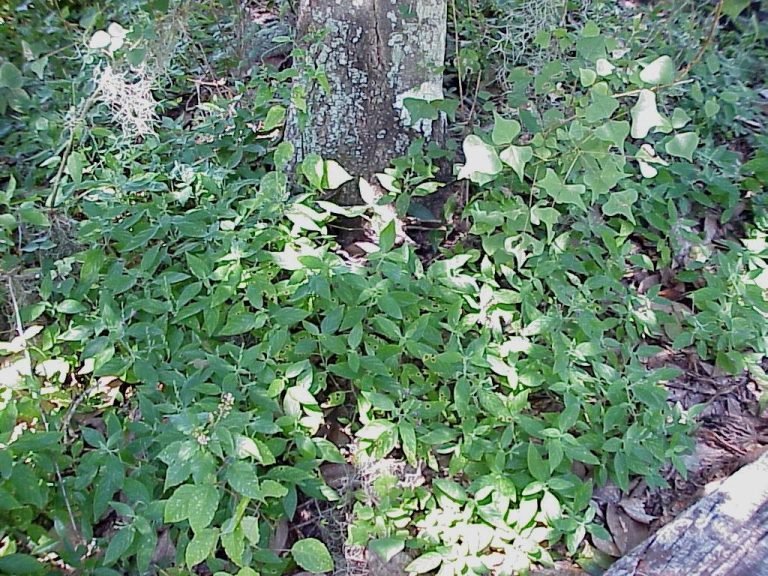
Latin Name: Justicia pringlei. Previously known as Justicia cooleyi.
Common Names: Cooley’s justicia and Cooley’s water-willow.
Family: it is found in the Acanthaceae, or acanthus, family.
Form: a low growing perennial, wildflower, that barely reaches 12 inches in height when mature.
Leaves: its leaves are opposite, lanceolate to ovate, hairy, with entire leaf margins and short stalks.
Flowers: the small magenta flowers appear in the summer and fall.
Habitat: its preferred site is underneath live oak trees and shady tree canopies.
Native Range: this endangered wildflower is only found in Citrus, Jackson, Lake, Hernando and Sumter counties.
Landscape Use: in the home landscape it makes a great groundcover underneath the heavy shade of large oak trees.
The plants get to about a foot in height and require no maintenance whatsoever except for an occasional weeding.
Cooley’s water-willow is drought tolerant and can rely on average rainfall helped with a layer of leaf litter to retain moisture and provide nutrients.
Wildlife Uses: the flowers are used as a nectar source by many small butterflies and bees. The seeds may be eaten by birds and other small mammals.
Propagation: is achieved through transplanting and starting from seeds. Transplants should be trimmed of most foliage and all flowers so as not to stress the plant out when moving it to a new location. I trim the entire top of the plant off with a pair of scissors (to about 4 inches high), dig up the roots with a small trowel and move to the new location being sure to water it until it is established or plant during a rainy spell. Starting seeds is probably easiest in damp paper towels, but I usually just sow them where I want them to grow.
Ludwigia arcuata
(peidmont primrosewillow)
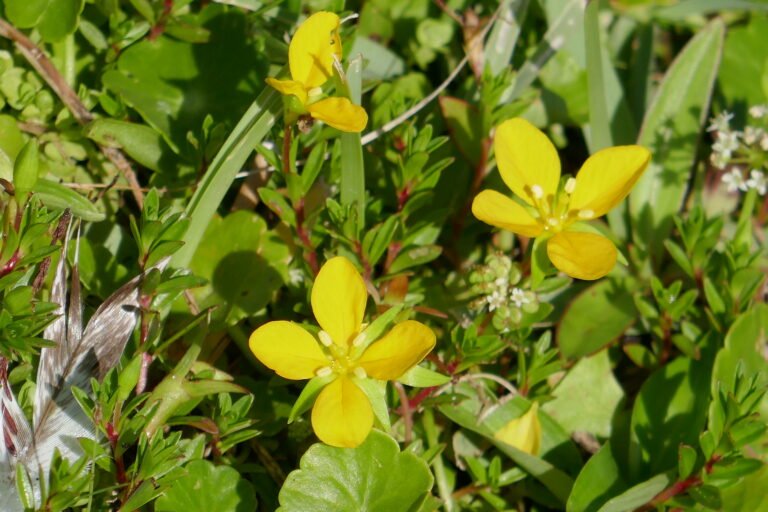
Latin Name: Ludwigia arcuata. It used to be called Ludwigiantha arcuata.
Common Names: needleleaf ludwigia, false loosestrife, and piedmont primrosewillow.
Family: it is found in the Onagraceae, or evening primrose, family.
Form: it is a perennial, wildflower, that grows to 10 to 20 inches in height.
Leaves: its leaves are opposite and sessile on the stem. They are linear to oblanceolate in shape.
Flowers: the bright yellow flowers appear in the spring, summer and fall.
Habitat: it occurs naturally in marshes, ponds, lake shores, and damp forests and pinelands.
Native Range: it is native to the southeastern United States, and is found in Florida from central to the west coast.
Landscape Use: in the home landscape it needs a moist to wet environment to thrive. Since it stays relatively short it is a good candidate for in between stepping stones. it can handle light foot traffic.
Wildlife Uses: if grown in shallow water it provides habitat for small fish and aquatic insects. The flowers are a nectar source for many small pollinators.
Propagation: it can be grown from seeds, cuttings, and transplants. Cuttings will root in water if there are no roots present.
Mecardonia procumbens
(baby jump-up)
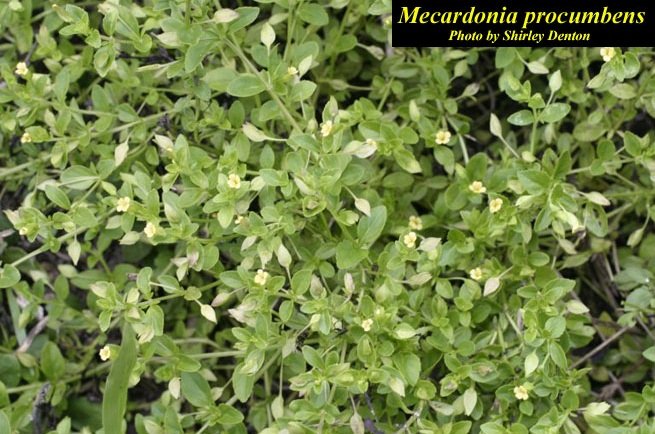
Latin Name: Mecardonia procumbens
Common Names: some of its common names are yellow-flowered waterhyssop, prostrate water-hyssop, and prostrate Mecardonia.
Family: it is found in the Plantaginaceae, or plantain family.
Form: it is a low growing plant that forms mats and makes an excellent groundcover. Its mature height is about 6 inches.
Leaves: its leaves are opposite with serrate margins. They are ovate to elliptic in shape.
Flowers: the tiny yellow flowers appear in spring, summer and fall.
Habitat: it thrives in riparian areas such as pond margins, stream banks, and swampy areas.
Native Range: it occurs naturally in the southern Unites States. In Florida it is found in scattered counties.
Landscape Use: it has been shown to cope with soils from dry to moist. A moist environment will certainly give the plant a better chance at survival on its own. If you try it in a dry area be sure to keep it watered when it shows signs of stress.
Wildlife Uses: the plant provide shelter, foraging, and nectar sources for many small animals and insects.
Propagation: it is easiest to propagate using cuttings. Some pieces may have roots and those can be moved to another moist or wet area and should grow fine. Cuttings can be grown in water, potting soil, or no-soil growing medium.
Mimosa strigillosa
(powderpuff)
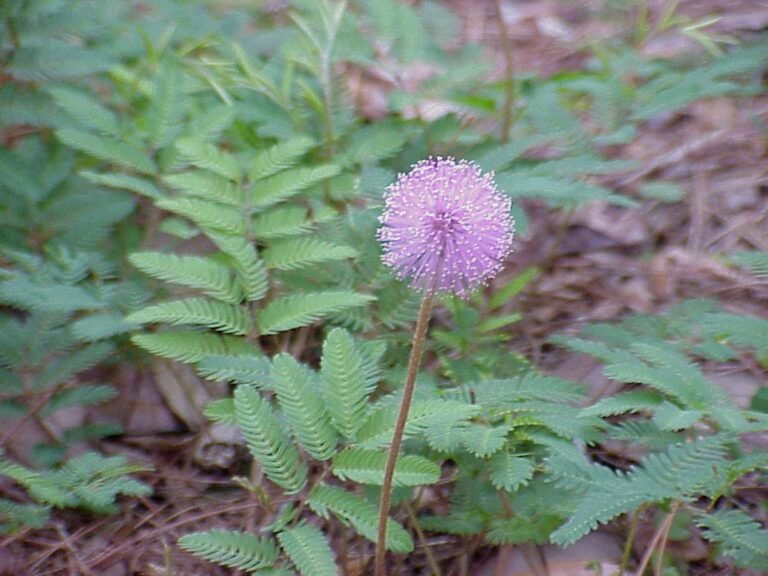
Latin Name: Mimosa strigillosa
Common Names: powderpuff, sunshine mimosa, and sensitive plant.
Family: it is in the Fabaceae, or bean, family.
Form: this low growing wildflower rambles along the ground and grows like a ground cover, but not very dense. This variety does not have thorns.
Leaves: its leaves are evergreen and bipinnately compound. The leaflets are slender and linear, and close when touched.
Flowers: pink puffballs appear in the spring, summer and fall.
Habitat: it is found occurring naturally along stream banks, riparian areas, disturbed sites, and pinelands.
Native Range: Mimosa strigillosa is native to the following states: AR, FL, GA, LA, MO, MS, and TX. It has been found occurring naturally in about eighty percent of Florida counties.
Landscape Use: in the home landscape it can be grown in a variety of soils that are not necessarily moist. It does not tolerate standing water so the soil must be well drained. Plant in part shade.
Wildlife Uses: the flowers are a nectar source for small pollinators, and some animals eat the seeds.
Propagation: it can be grown from seed, transplanting, and root cuttings. It transplants very easily. The plant usually roots at each stem node so even if you break off most of the plant as long as there are roots at some of the nodes it will recover and regrow.
Mimosa quadrivalvis var. floridana
(Florida sensitive briar)
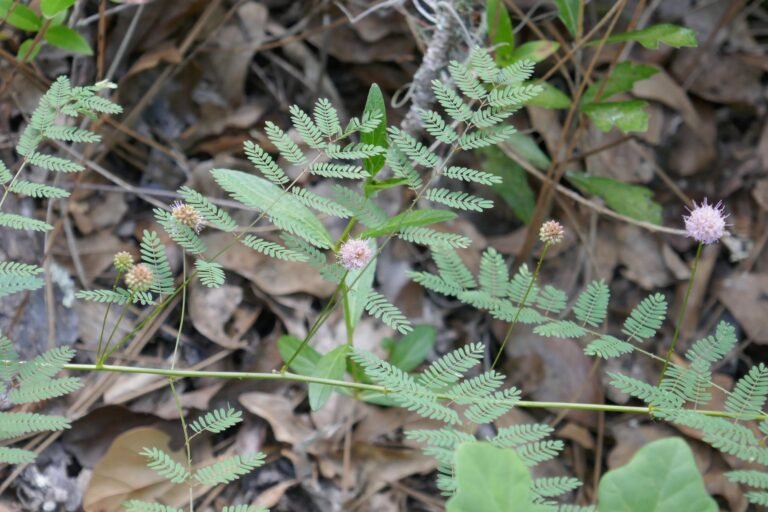
Latin Name: Mimosa quadrivalvis var. floridana. It was previously called Schrankia micropylla.
Common Names: some of its common names are Florida sensitive-briar, powderpuff mimosa, and four-valve mimosa. The Florida Plant Atlas spells it brier but I have never seen it spelled that way before.
Family: it is in the Fabaceae, or bean, family.
Form: it is a low growing perennial wildflower that gets to a mature height of about 2 feet. It is thorny.
Leaves: its leaves are evergreen and bipinnately compound. The leaflets are slender and linear, and close when touched. The stems are thorny.
Flowers: pink puffballs appear in the spring, summer and fall.
Habitat: it occurs naturally in pinelands, dry woods, sandhills, scrub, and even mesic forests.
Native Range: In Florida it is found naturally occurring from Nassau county south to Palm Beach county.
Landscape Use: it is thorny so is not a good candidate for a groundcover that will be used as a foot path, however, it is a beautiful groundcover to have in a natural area. In too much shade it becomes lanky and won’t make a very dense groundcover so it might be best used with other wildflowers.
Wildlife Uses: it provides nectar for pollinators, forage for deer and turkey, cover for small animals and birds, and the seeds are eaten by songbirds and quail.
Propagation: it can be grown from seeds, cuttings, and transplants. Try to attain cuttings that have a few roots on them already and the plant will recover faster. Cuttings without roots can be grown in moist potting soil.
Oxalis corniculata
(yellow wood sorrel)
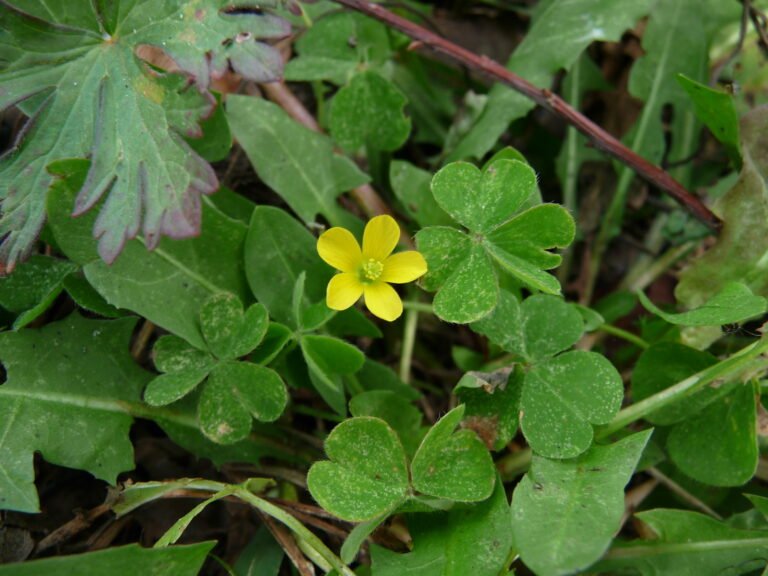
Latin Name: Oxalis corniculata. Previously known as Oxalis stricta.
Common Names: other common names include creeping woodsorrel, creeping oxalis, yellow shamrock, sour grass, and yellow-sorrel shamrock.
Family: it is found in the Oxalidaceae, or wood-sorrel, family.
Form: it is a low growing perennial wildflower that reaches a mature height of 12 inches.
Leaves: its leaves are compound trifoliate, meaning they have three leaflets per leaf. Each leaflet appears heart shaped. The plant looks similar to clover.
Flowers: the bright yellow flowers appear all year, but seem to be most abundant during the cooler seasons.
Habitat: it occurs naturally in open forests, lawns, fields, disturbed sites, and growing containers.
Native Range: it occurs naturally throughout the state of Florida with the exception of St. Lucie, and Union counties.
Landscape Use: in the home landscape it can be used tucked into containers with other flowers or as a groundcover. It does tolerate light foot traffic. Watch your bare feet though because it attracts stinging pollinators like bees.
Wildlife Uses: the flowers are a nectar source for small bees, butterflies and skippers. The seeds are eaten by various birds like quail, sparrows, and doves. Mammals such as mice, deer, and rabbits eat the foliage.
Propagation: it can be grown from seeds, transplants, and root cuttings. This plant tends to send out roots where the stem touches the ground so small pieces can be collected to create new plants.
Pectis prostrata
(spreading cinchweed)
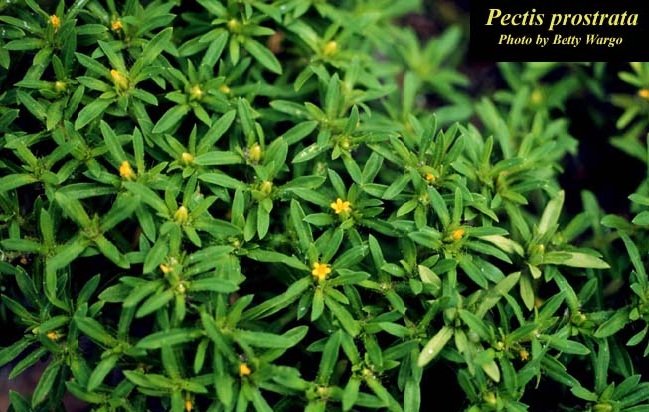
Latin Name: Pectis prostrata
Common Names: other common names include chinchweed and spreading chinchweed. The Florida Plant Atlas uses the spelling cinchweed.
Family: it is found in the Asteraceae, or aster, family.
Form: a low growing perennial wildflower that grows to a height of 4 inches but spreads out much wider.
Leaves: its leaves are opposite and sessile. The leaf shape ranges from linear to lanceolate. Tiny bristles occur at the leaf bases.
Flowers: the small yellow flowers appear in summer and fall.
Habitat: it is found naturally occurring in sites such as dry roadsides, sandy areas in dry forests and lawns.
Native Range: it is found naturally occurring in the south United States. It is found in almost every county of Florida.
Landscape Use: in the home landscape it can be used dry sites with full sun. It tolerates soil moistures from dry to average. It can tolerate light foot traffic.
Wildlife Uses: the flowers are used as a nectar source by small pollinators and the foliage is used as cover and foraging areas for small wildlife like lizards, and skinks.
Propagation: it can be grown from seeds, transplants, and root cuttings. This plant tends to send out roots where the stem touches the ground so small pieces can be collected to create new plants.
Phyla nodiflora
(capeweed)
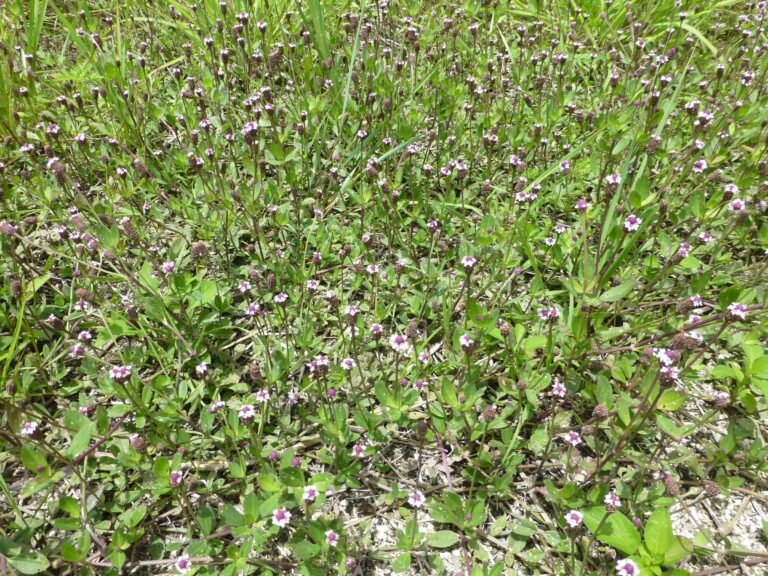
Latin Name: Phyla nodiflora
Common Names: turkey tangle fogfruit, frogfruit, capeweed, creeping frogfruit, common lippia, matchweed, and carpetweed.
Family: it is found in the Verbenaceae, or verbena, family.
Form: it is a low growing perennial wildflower that grows to a height of about 6 inches.
Leaves: its leaves are opposite and stalked. They are obovate to spatulate in shape with toothed margins near the apex.
Flowers: the white-pink flowers appear all year on this wildflower.
Habitat: dry meadows, damp meadows, sandy roadsides, wet roadsides, ditches, and coastal areas.
Native Range: it naturally occurs throughout most of the south in the United States. In Florida it is found in every county except Monroe Mainland.
Landscape Use: in the home landscape it is a great groundcover for so many situations because it can handle dry sandy to moist rich soils. If given the right spot it will thrive and form a dense groundcover. It is tolerant of light foot traffic, but be aware the flowers always have bees on them.
Wildlife Uses: it is a larval host plant for the white peacock butterfly. The flowers provide nectar for many small pollinators and the foliage makes foraging and resting areas for small wildlife like lizards, large insects, toads and frogs and a wide array of animals.
Propagation: the best way to propagate this wildflower is through root cuttings meaning taking pieces of a plant with roots already growing on it. It roots at various places on its trailing stem.
Polypremum procumbens
(rustweed)
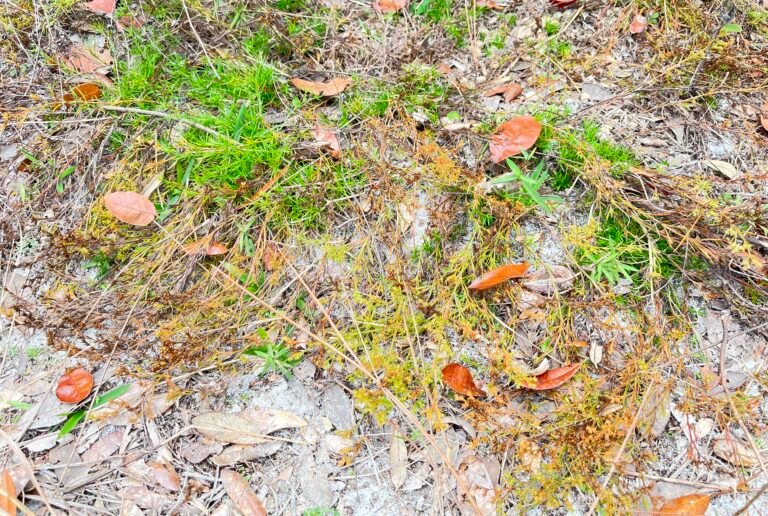
Latin Name: Polypremum procumbens
Common Names: rustweed and juniperleaf.
Family: it is found in the Tetrachondraceae, or rustweed, family.
Form: this is an annual wildflower that grows to a height of 4 to 12 inches.
Leaves: its leaves are opposite, linear in shape, with toothed margins.
Flowers: the tiny white flowers appearing the spring, summer and fall.
Habitat: it can be found naturally occurring in dry pinelands, disturbed sites, lawns, and dry roadsides.
Native Range: it is native to the southeastern United States. In Florida it can be found in every county except St. Lucie county.
Landscape Use: it can make a nice groundcover for dry, problem, areas where little else will grow. It does form a nice dense mat of plants. Even though it’s an annual it will continue to reseed and produce new plants.
Wildlife Uses: the tiny flowers are pollinated by tiny pollinators. The foliage provides cover and foraging areas for small wildlife.
Propagation: it can be grown from seeds (they need light to germinate), root cuttings or transplanting part or all of a plant.
Portulaca pilosa
(pink purslane)
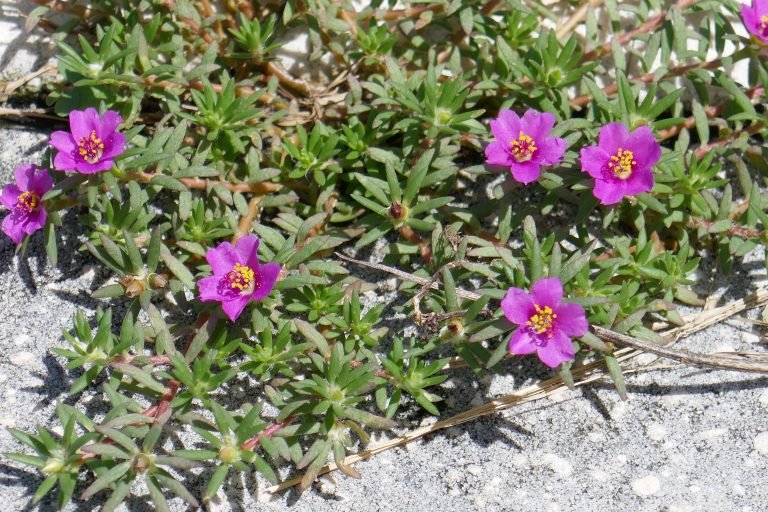
Latin Name: Portulaca pilosa
Common Names: kiss-me-quick, pink purslane, hairy pigweed, shaggy portulaca, and hairy portulaca.
Family: it is in the Portulacaceae, or purslane, family.
Form: this small wildflower creeps along the ground with fleshy and branched stems and leaves.
Leaves: the leaves are alternate, linear to spatulate, and very fleshy and thick.
Flowers: the small magenta flowers appear in the spring, summer, and fall.
Habitat: it occurs naturally in disturbed sites and sandy areas such as pinelands and flatwoods.
Native Range: pink purslane is native to the following states: AL, AR, CO, FL, GA, HI, KS, LA, MO, MS, NC, NJ, NM, NV, OK, SC, TN, and TX.
Landscape Use: in the home landscape it can be used as a ground cover in areas where little else will grow. Once established it takes no care whatsoever.
Wildlife Uses: small bees and flies use the nectar of this plant.
Propagation: it can be grown from seed or transplanted. Transplants don’t need to be handled delicately, but keep them watered well until they recover.
Sisyrinchium angustifolium
(narrow-leaf blue-eyed grass)
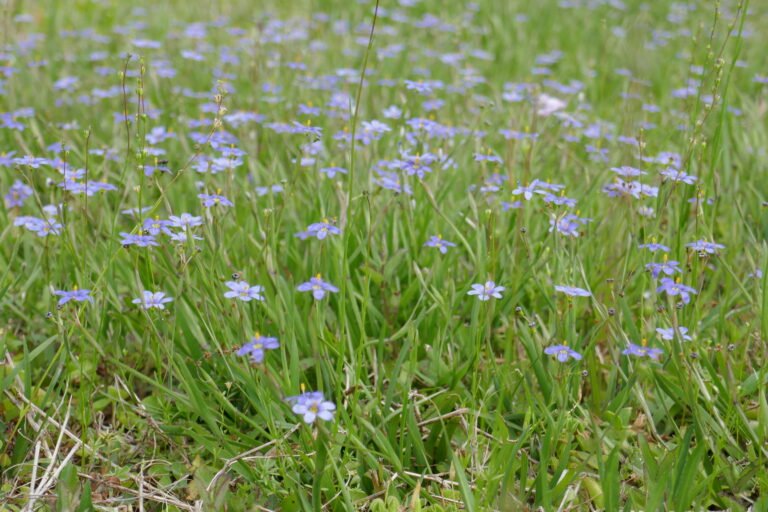
Latin Name: Sisyrinchium angustifolium
Common Names: blue-eyed grass, narrowleaf blue-eyed grass, Bermuda blue-eyed grass, and stout blue-eyed grass.
Family: it is found in the Iridaceae, or iris, family.
Form: it is a perennial wildflower that grows to about a foot in height. It forms small clumps and looks like grass when not in bloom.
Leaves: the leaves are narrow grass like with entire margins.
Flowers: the brilliant blue flowers are star shaped and appear in the spring and summer.
Habitat: it occurs naturally in moist forests, wet fields, pastures, and along stream banks.
Native Range: it is native to the eastern United States. In Florida it is found in every county except for DeSoto, Okeechobee, and St. Lucie counties.
Landscape Use: it is a gorgeous groundcover for moist sites. Once it begins to thrive it forms very dense mats of too many purple flowers to count. It does tolerate light foot traffic.
Wildlife Uses: the flowers provide a nectar source for many pollinators and the foliage provides foraging and resting areas for many species of small wildlife. The seeds are eaten by songbirds.
Propagation: it can be grown from seeds, transplanting specimens and root cuttings.
Spermacoce prostrata
(prostrate false buttonweed)
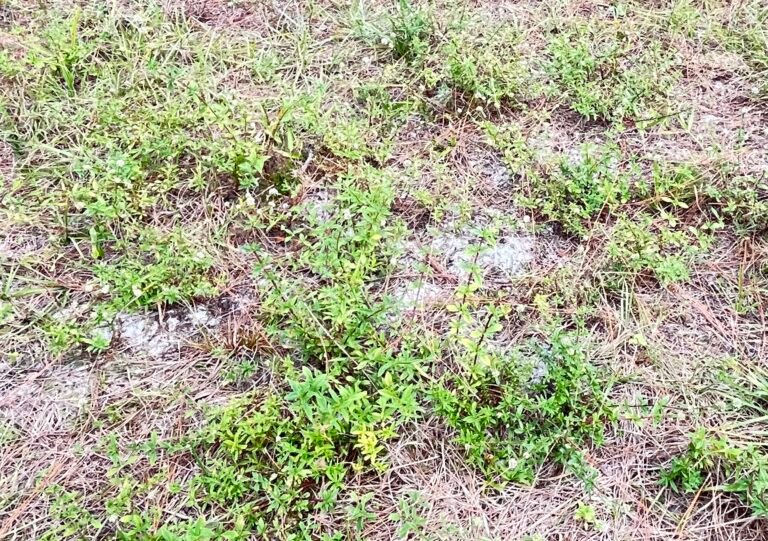
Latin Name: Spermacoce prostrata. Previously called Borreria ocimoides.
Common Names: prostrate false buttonweed and false buttonweed.
Family: it is found in the Rubiaceae, or madder, family.
Form: it is an annual wildflower that grows to a height of 16 to 20 inches.
Leaves: its leaves are opposite with short stalks. They are linear to narrowly lanceolate in shape. The margins have tiny hairs.
Flowers: the clusters of white flowers appear in the spring and summer.
Habitat: it can be found in dry and moist pinelands, pastures, forests, creek and river banks, and lawns.
Native Range: it is native to the southeastern United States. In Florida it is found in scattered counties throughout the state.
Landscape Use: it will thrive in dry to moist soils so it is quite variable and not picky about it’s moisture or soil. It grows in part shade to full sun. The flower clusters are rather spikey so it’s not comfortable to walk on with bare feet.
Wildlife Uses: the flowers are used as a nectar source for many small pollinators and the foliage provides foraging areas, and shelter for small wildlife.
Propagation: it can be grown from seed, cuttings or transplants. It roots at the stem nodes so it is easy to find pieces with roots already attached.
Viola sororia
(common blue violet)
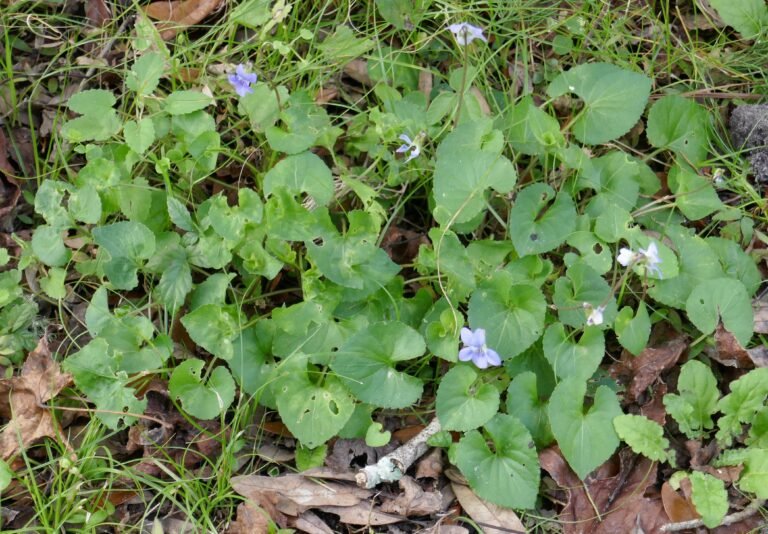
Latin Name: Viola sororia
Common Names: some of its other common names are blue violet, meadow violet, purple violet, wood violet, Confederate violet, sister violet, and dooryard violet.
Family: it is found in the Violaceae, or violet, family.
Form: it is a perennial wildflower that grows to a mature height of 10 inches.
Leaves: its leaves are basal and shallowly toothed and stalked with the stalk length varying from 1 – 4 inches. They are triangular-ovate in shape and may appear heart shaped.
Flowers: common blue violet flowers can come in all shades of violet and blue with some occasionally white or half white and half violet. The blooms appear in the cooler months of winter and early spring.
Habitat: common blue violet occurs naturally in forests, oak hammocks damp sites such as the edges of moist meadows and fields, roadsides and along streams and lakes. The soil must drain well because they won’t survive in standing water.
Native Range: In the United States the common blue violet is found in the eastern and central portion, north to Canada and south to Florida, and west to the Rocky Mountains. In Florida the common blue violet is found naturally occurring throughout most of the state.
Landscape Use: in the home landscape it grows in part shade with average to moist soils. These tiny wildflowers can be tucked into just about any spot in the garden that is partially shaded. They also do well at the base of other plants in container gardens and can be used to fill in between stepping stones if the soil stays moist.
Wildlife Uses: bees and butterflies use the flowers as a nectar source. The seeds, flower buds, flowers, and leaves are eaten by songbirds and small mammals.
Propagation: it can be propagated by seeds, division, and transplants.
Native Plant Nurseries in Central Florida

Green Isle Gardens
Green Isle Gardens specializes in Florida native plants and wildflowers, with a focus on upland plant species. The nursery has 8 acres under production and features more than 150 species of native plants.
Our plants are grown without using pesticides with the goal of preserving nature, and all its critters, in mind. We encourage the use of pine straw mulch and offer bales for sale.
Green Isle Gardens is open to the public for retail sales.
Wednesday – Friday: 8am to 3:30pm
Saturday: 8am to 3pm
They are located in Groveland.
Green Isle Gardens Retail Plant List
Green Isle Gardens
11303 Florida 33
Groveland, FL 34736
Use this link to go to Google Maps to show the location:
The Nectary
A native plant nursery that is open to the general public.
Thursday 11am-3pm
Fridays and Saturdays 9 am – 3 pm
They are located in Lakeland, Florida
1047 E. Main Street (863) 937-7879 TheNectaryLKLD@gmail.com
Use this link to get to Google Maps to show the location.
1047 E. Main St, Lakeland FL 33801
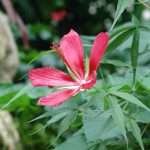
Mail Order Natives
We have provided native plants to wonderful people across the USA for 15 years. That is our mission! We also would like you to know our plants are NEVER collected from the wild. We grow all of our plants from seed or cuttings in our own facility. We will be adding extra plant selections over the next few months, so come back regularly. You can contact us at: 850-973-7371 (cell), 850-971-5416 (fax), and email: mailordernatives@gmail.com
A native plant nursery that ships plants through the mail.
They are located in Lee, Florida.
Their plants are the most gorgeous natives that I have ever purchased. Yes shipping can be expensive, but it is so worth it because of the quality of the plants. They also pack their orders with great care. I’ve been thrilled with every purchase and I’m sure you will be too.