
Salix caroliniana
(Coastalplains Willow)

Common Names, Latin Name, and Family
Common names include coastalplains willow and Carolina willow.
Its Latin name is Salix caroliniana.
It is in the Salicaceae family (willows and poplars).
Form
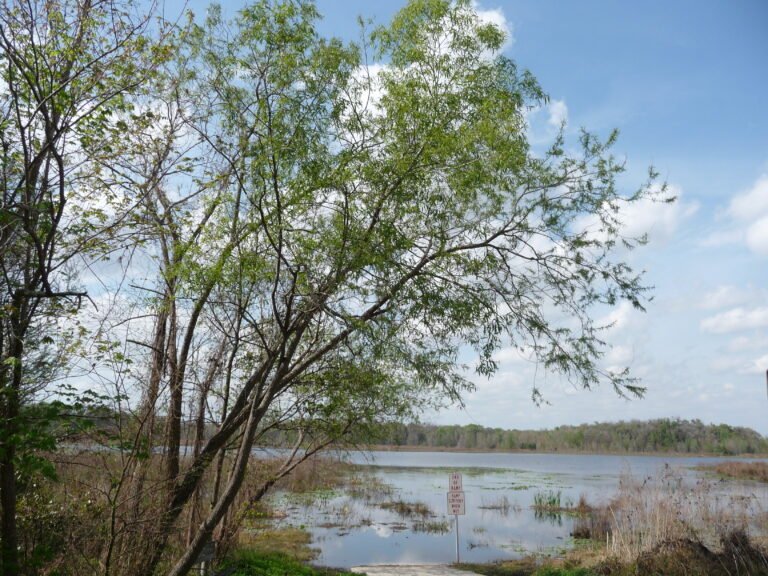
Coastalplains willow is a deciduous, tree that has long weeping branches. It grows to a height of twenty feet in moist to wet soils in full sun.
It is dioecious, meaning male and female flowers grow on separate trees rather than the same tree.
Leaves
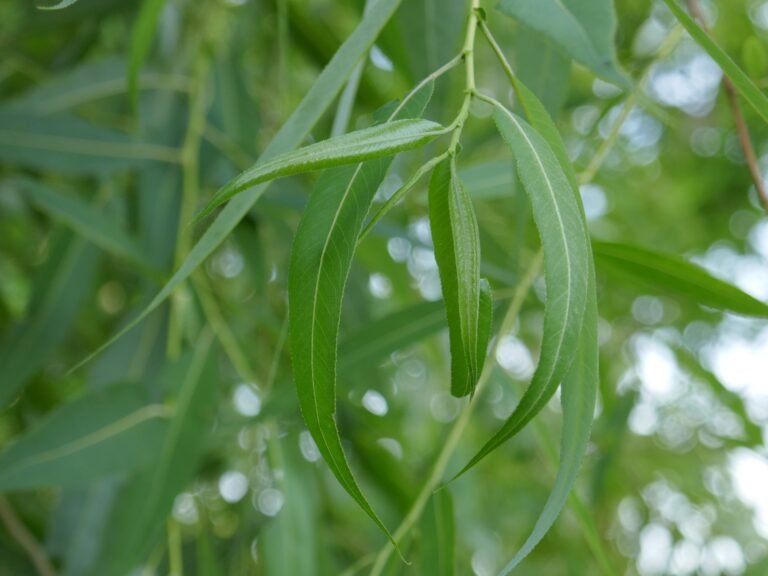
Its leaves are alternate, simple and lanceolate in shape. The margins have tiny serrations. They grow to a maximum length of about seven inches and about 1 1/2 inches wide. Very distinctly long and slender. The lower surface is whitish in color.
Flowers
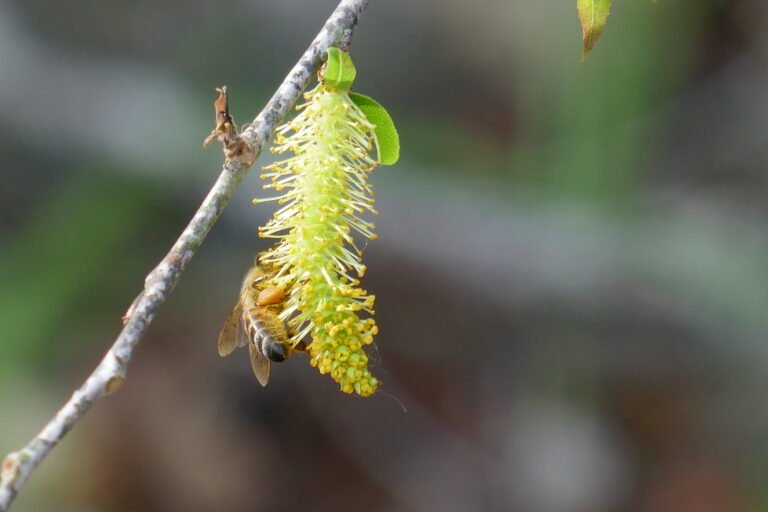
The male flowers are pale yellow pollen bearing catkins and the female catkins have small capsules filled with tiny seeds attached to white fluff that helps them to get dispersed on the wind.
One doesn’t generally need one of each sex tree in order to get seeds on a female because pollinators travel long distances in search of pollen and nectar so a single female tree will usually get pollinated.

Seeds
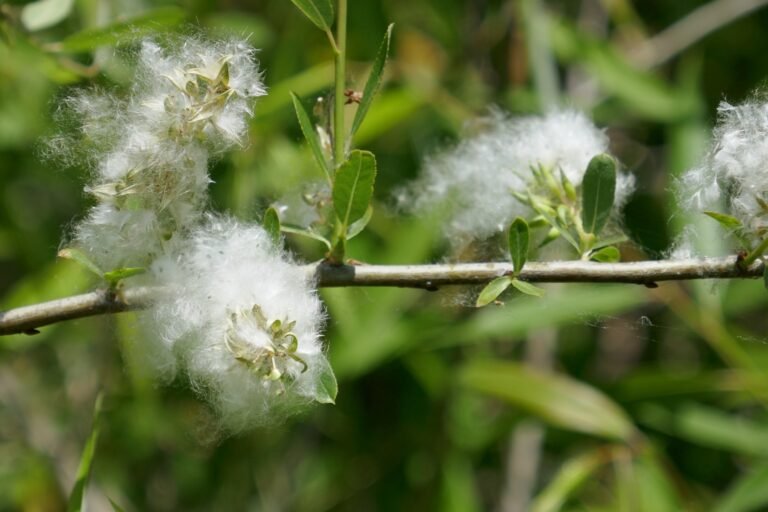
Once the female seed pods become viable they pop open to reveal a fluff that is full of tiny seeds. If using them for propagation they must be very fresh so use them right away.
Habitat
The coastalplains willow is found mostly in wet sites, drainage ditches, along rivers, streams, lakes, and any place where standing water occurs such as marshes and open wet forests.
Native Range
It occurs naturally in the southeastern and east central United States down into the Caribean and Central America.
It is found throughout the entire state of Florida.
Landscape Use
This native tree needs lots of water and sunlight. It grows to about twenty feet and can get just about as wide so it’s best planted off of pathways. However, it can be kept pruned to keep the overhanging branches out of passersby.
It is not particular about soil and can tolerate soil with clay that creates standing water where many other plants cannot.
Human Use
Salix contains salicylic acid which is the main component in aspirin, but our modern version is synthetic.
Salix caroliniana is “Widely used by Native American across its range. Root-bark tea used to thin blood, alleviate fevers, stiff neck backaches, rheumatism, headaches, diarrhea; to induce vomiting….” [1] Foster and Duke. Peterson Field Guide to Medicinal Plants and Herbs of Eastern and Central North America. Houghton Mifflin, New York. 2014.
Wildlife Use
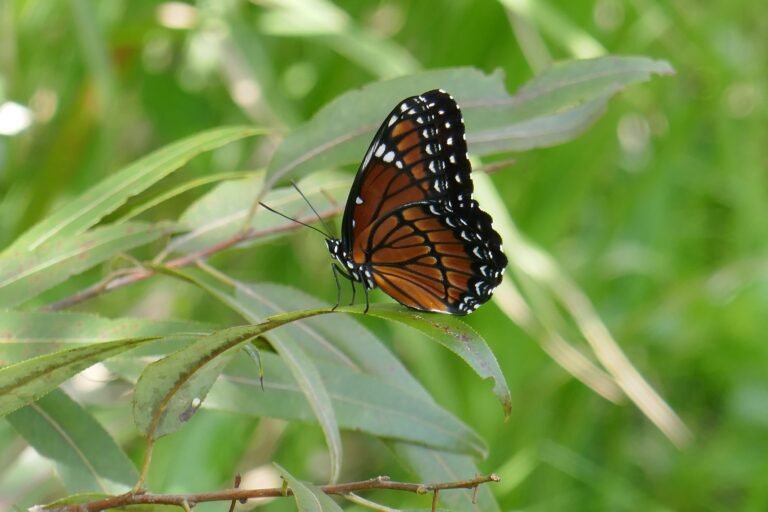
It is an important part of wetland ecosystems because it provides food and shelter for many animals. Deer eat the leaves and twigs, muskrats and rabbits eat the young shoot, bark and buds, various water birds eat the catkins and leaves, and pollinators use the catkins as a nectar source. It is also a larval host plant for several butterflies such as the viceroy, the red spotted purple, the mourning cloak, the eastern comma, the Io moth, and occasionally the tiger swallowtail. The only butterfly out of this list that I’ve seen using this tree is the viceroy.
Propagation
Coastalplains willow roots well from semi-hardwood or hardwood cuttings. Cut them no longer than twelve inches in length and remove all but a few leaves at the top of the cutting. They can be rooted in water or in soil that is kept constantly moist. They do not need a rooting hormone. Once you start to see a mass of roots the cuttings can be potted up into larger containers. Once your plants start to put on more growth and look strong and healthy they can be planted out into your green space.
It’s also feasible to stick cuttings directly in the area you want them to grow in if the soil is constantly moist. I would suggest using double the amount of cuttings to account for the ones that don’t take.
This tree can send out suckers so those can be used to start new plants as well. Find ones with a few healthy roots, cut them from the main root, and pot into rich potting soil and keep watered until new growth, and roots, appear.
They can also be propagated from seed. Fresh seeds are needed and should be sown immediately after collecting them. Place the seeds on the soil surface and lightly press down to make good contact. As with many native seeds they need light to germinate so do not cover them with soil. These tend to germinate in a matter of a few days. Keep the soil moist by either light spraying or watering from underneath (by storing the pots in a larger container that holds water). Wait for them to develop a good root system before planting out or in larger pots. The seeds lose viability very quickly so they are not a good candidate for storing for later use.
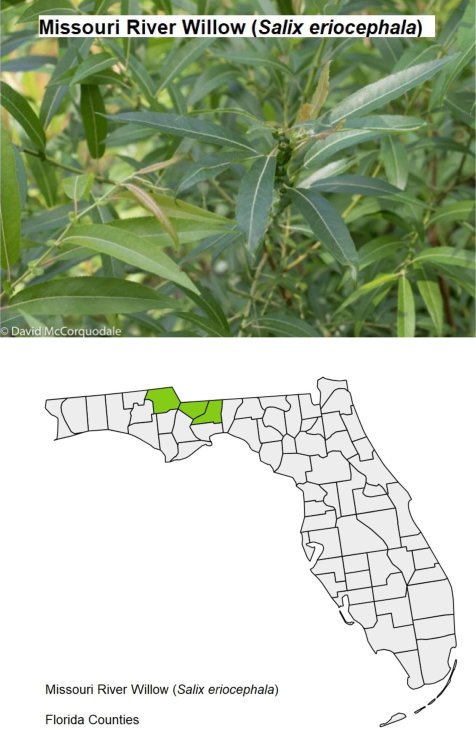
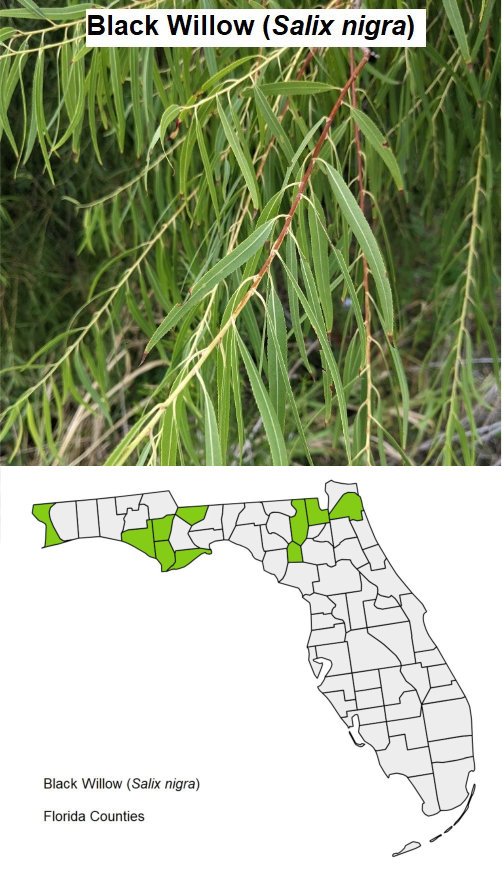
Our Four Other Native Willows


Footnote
[1] Foster and Duke. Peterson Field Guide to Medicinal Plants and Herbs of Eastern and Central North America. Houghton Mifflin, New York. 2014.
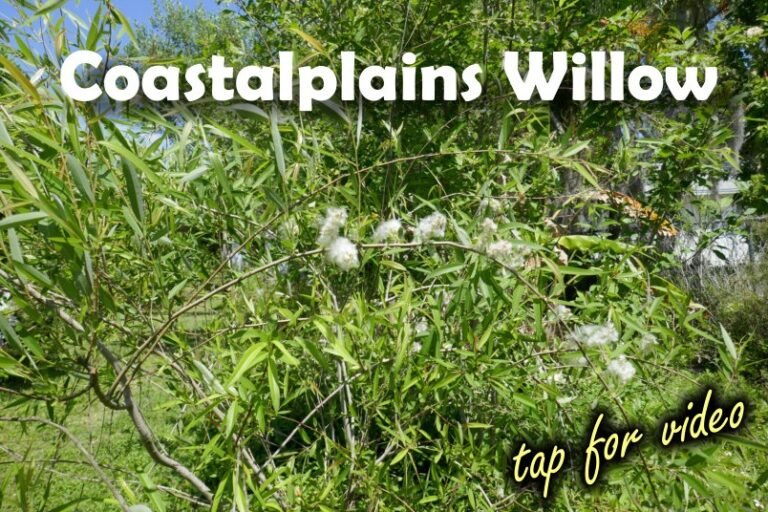
You’ve probably seen this tree growing in roadside ditches or around lakes or streams and not known that this is a native willow tree. It’s called the coastalplains willow (Salix caroliniana) and is the most common willow in Florida. It’s documented for every county except for the Keys and Okaloosa county.
It is an important part of wetland ecosystems because it provides food and shelter for many animals. Deer eat the leaves and twigs, muskrats and rabbits eat the young shoot, bark and buds, various water birds eat the catkins and leaves, and pollinators use the catkins as a nectar source. It is also a larval host plant for several butterflies such as the viceroy, the red spotted purple, the mourning cloak, the eastern comma, the Io moth, and occasionally the tiger swallowtail. The only butterfly out of this list that I’ve seen using this tree is the viceroy.